


A Home Gym Under 1000 is more than possible. It is practical when you build around the right foundations.
You do not need every machine in a commercial gym. You need equipment that helps you train the major movement patterns: squat, hinge, push, pull, carry, rotate, and stabilize.
You also need a setup that fits your space, schedule, and goals.
This guide shows you how to build an affordable home gym with quality equipment, smart spending, and room to grow. Consistency creates results. Your equipment simply removes friction.
Table of Contents
- What Makes a Complete Home Gym?
- The Best Home Gym Under 1000 Budget Plan
- Step 1: Build Your Strength Foundation
- Step 2: Add Cardio Without Overspending
- Step 3: Choose High-Value Accessories
- Step 4: Make Your Space Safe and Convenient
- A Simple Weekly Home Gym Workout Plan
- Common Budget Home Gym Mistakes
- Frequently Asked Questions
- Final Takeaways
What Makes a Complete Home Gym?
A complete home gym does not contain every possible product.
It supports the training you actually plan to do.
Your setup should help you perform:
- Lower-body strength: squats, lunges, step-ups, and deadlift variations
- Upper-body pushing: push-ups, chest presses, and shoulder presses
- Upper-body pulling: rows, pull-ups, and pulldowns
- Core training: anti-extension, anti-rotation, flexion, and stability work
- Cardio: steady movement and interval training
- Mobility and recovery: warm-ups, stretching, and light movement
This approach gives you more value from every item.
A pair of adjustable dumbbells can support rows, presses, squats, Romanian deadlifts, lunges, and carries. Resistance bands can provide warm-up resistance, assisted pull-ups, mobility work, and light strength training.
That is the standard to use:
Choose equipment that solves more than one problem.
The Centers for Disease Control and Prevention recommends that most adults work toward at least 150 minutes of moderate aerobic activity each week and muscle-strengthening activity on two or more days. You can review the full CDC adult physical activity guidelines.
The Best Home Gym Under 1000 Budget Plan
Prices change by brand, availability, shipping, and sales. Use this as a flexible target rather than a strict shopping list.
| Category | Suggested investment | Purpose |
|---|---|---|
| Primary resistance equipment | $300–$425 | Dumbbells, weight set, or compact strength system |
| Bench and pulling option | $150–$250 | Bench, power tower, pull-up bar, or suspension trainer |
| Floor protection | $50–$100 | Exercise mat or rubber flooring |
| Cardio equipment | $25–$125 | Jump rope, compact cardio tool, or simple machine |
| Core and accessory tools | $75–$125 | Ab roller, bands, grip tools, and mobility equipment |
| Boxing or conditioning equipment | $50–$150 | Boxing target, reflex tool, or training bag |
| Reserve | $50–$100 | Shipping, tax, storage, or future upgrades |
You do not need to spend every dollar immediately.
A strong first purchase is better than five random purchases.
Why it matters
A budget is a foundation. It keeps your investment focused on equipment you will use repeatedly instead of products that look impressive but collect dust.
Step 1: Build Your Strength Foundation
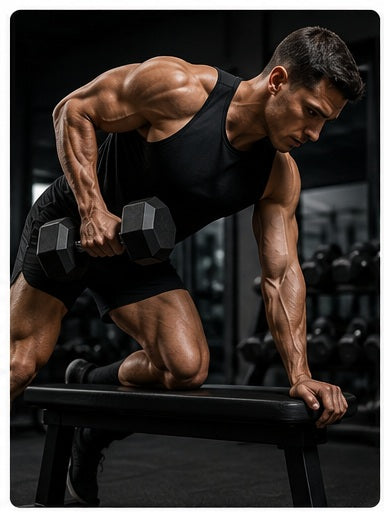
Strength training gives your home gym structure. Start with equipment that supports progressive overload.
Progressive overload means gradually increasing the challenge through:
- More resistance
- More repetitions
- More sets
- Better control
- Longer time under tension
- More difficult exercise variations
Option A: Adjustable dumbbells or a compact weight set
Adjustable equipment saves space and expands your exercise menu.
Qwik-Fit lists the CAP 66Lb Versatile Weight Set, which combines adjustable dumbbell, barbell, and kettlebell functions in one compact set.
This type of equipment works well for:
- Goblet squats
- Dumbbell bench presses
- One-arm rows
- Romanian deadlifts
- Reverse lunges
- Shoulder presses
- Loaded carries
- Kettlebell-style conditioning
A 66-pound set may be enough for a beginner or general fitness routine. Experienced lifters may eventually need heavier plates or a barbell-based setup.
Option B: A bench
A bench increases the number of exercises you can perform.
Use it for:
- Flat presses
- Incline presses
- Supported rows
- Step-ups
- Bulgarian split squats
- Hip thrusts
- Seated shoulder presses
- Core exercises
If space is limited, choose a bench that can be moved or stored vertically. A sturdy flat bench is often more valuable than a low-quality adjustable bench with too many unstable positions.
Option C: A pull-up or dip station
Vertical pulling strengthens the upper back, arms, and grip.
A compact power tower can provide pull-ups, assisted variations, dips, knee raises, and push-ups. Qwik-Fit's SOGES Adjustable Power Tower is one example of a multifunctional option.
If you do not have room for a tower, consider a secure door-mounted pull-up bar or suspension trainer. Always verify the installation requirements before use.
Why it matters
Your strength foundation should cover the major muscle groups without requiring a large room. Dumbbells, a bench, and a pulling option create a durable anchor for full-body workouts.
Step 2: Add Cardio Without Overspending
Cardio does not require a large treadmill or expensive machine.
You can build cardiovascular fitness with:
- Brisk walking
- Jogging
- Jump rope
- Step-ups
- Shadow boxing
- Marching intervals
- Bodyweight circuits
- Cycling
- Short high-intensity intervals
A jump rope is inexpensive and easy to store. A walking route outside is free. A compact cardio machine can be added later if you prefer indoor training.
Qwik-Fit offers a home cardio equipment collection for people who want to expand their setup over time.
A simple 15-minute cardio session
Complete three rounds:
- Brisk march or light jog in place for 60 seconds
- Step-ups for 45 seconds
- Slow mountain climbers for 45 seconds
- Rest for 60 seconds
- Repeat
Make the session easier by reducing work time. Make it harder by adding a fourth round or increasing the pace.
Boxing as cardio
Boxing is a practical way to add conditioning, coordination, and variety.
The Smart Electronic Wall-Mounted Boxing Target category is represented in Qwik-Fit's catalog by the Smart Wall-Mounted Music Boxing Training Machine.
Use a boxing target for short rounds of controlled punches. Keep your hands protected, maintain good posture, and focus on technique before speed.
Why it matters
Cardio equipment should make movement easier to start. It does not need to dominate your room or your budget.
Step 3: Choose High-Value Accessories
Accessories are useful after your main strength and cardio foundations are in place.
They improve variety. They also help you train around limitations such as small spaces, limited loading, or busy schedules.
Resistance bands
Resistance bands are lightweight, portable, and versatile.
Use them for:
- Warm-ups
- Glute activation
- Shoulder work
- Assisted pull-ups
- Light rows
- Chest presses
- Mobility drills
- Travel workouts
Browse Qwik-Fit's fitness accessories collection for compact tools that complement a larger home gym.
Core training
Core training should develop control, not simply create fatigue.
A Smart Ab Roller or dual-wheel ab roller can challenge the anterior chain, including the abdominals, shoulders, and hip stabilizers.
Qwik-Fit's Athletic Works 7" Dual Ab Wheel is a compact example. Start with short rollouts from your knees. Keep your ribs controlled and avoid letting your lower back collapse.
Other effective core exercises include:
- Dead bugs
- Bird dogs
- Planks
- Side planks
- Suitcase carries
- Slow mountain climbers
Grip and narrow-grip training
Grip strength supports rows, carries, pull-ups, deadlifts, and many sports.
A Resistance Muscle Narrow Grip Workout Tool can be useful as a supplemental accessory for focused upper-body and grip work. It should not replace rows, pulls, presses, or compound exercises.
Use focused grip tools two or three times per week with controlled repetitions. Avoid training to failure every day.
You can explore Qwik-Fit's grip and wrist training equipment for additional options, including wrist rollers and adjustable grip strengtheners.
EMS equipment
An EMS Muscle Stimulator Set is an optional add-on. It is not a replacement for progressive strength training, cardio, sleep, or balanced nutrition.
If you use an EMS device:
- Follow the product instructions carefully
- Use only the recommended placement and intensity
- Do not use it to push through pain
- Ask a qualified healthcare professional if you have a medical condition, are pregnant, or use an implanted electronic device
- Stop if you experience unusual discomfort, skin irritation, dizziness, or other concerning symptoms
Treat EMS as an accessory. Your main results come from training consistently.
Lion's Mane Supplement
Wellness products can support your routine, but they should never distract from the basics.
Qwik-Fit lists an Encapsulate Lion's Mane Mushroom 8:1 product in its wellness catalog. A Lion's Mane Supplement should be viewed as optional. Human evidence for cognitive benefits remains limited, and lion’s mane is not an approved treatment for disease.
The National Institutes of Health’s LiverTox overview of lion’s mane reports that it has generally been well tolerated in short-term use, while also noting that long-term safety and effectiveness are not firmly established.
Speak with a healthcare professional before using supplements if you have allergies, take medication, are pregnant, or manage a health condition.
Why it matters
Accessories should support your plan. They should not become the plan.
Step 4: Make Your Space Safe and Convenient
A home gym works best when it is ready before you are.
You do not need a dedicated room. You need a clear training zone.
Measure before buying
Measure:
- Floor length and width
- Ceiling height
- Doorway width
- Storage space
- Clearance around moving equipment
- Wall strength before mounting anything
Leave enough room to move safely. A compact gym that forces you to train beside furniture is not a complete solution.
Protect the floor
An exercise mat or rubber flooring can:
- Reduce noise
- Improve traction
- Protect the floor
- Make floor exercises more comfortable
- Define your workout area
Qwik-Fit's QF Foam Yoga Mat is one portable option for mobility, core training, and low-impact sessions.
Organize your equipment
Use:
- Wall hooks
- Storage bins
- A small shelving unit
- Vertical dumbbell storage
- A dedicated basket for bands and ropes
The goal is simple: every item has a place.
A Simple Weekly Home Gym Workout Plan
You can build a balanced routine with three strength sessions and two cardio sessions.
Monday: Full-body strength
Complete three rounds:
- Goblet squat : 8–12 repetitions
- Dumbbell bench press : 8–12 repetitions
- One-arm row : 10 per side
- Romanian deadlift : 8–12 repetitions
- Plank : 20–40 seconds
Tuesday: Cardio and mobility
- Brisk walk, jump rope, or boxing : 15–25 minutes
- Hip mobility : 5 minutes
- Shoulder mobility : 5 minutes
Wednesday: Rest or active recovery
Take an easy walk. Stretch gently. Recover.
Thursday: Full-body strength
Complete three rounds:
- Reverse lunge : 8 per side
- Shoulder press : 8–12 repetitions
- Assisted pull-up or band row : 8–12 repetitions
- Hip thrust : 10–15 repetitions
- Dead bug : 8 per side
Friday: Cardio intervals
Complete four rounds:
- Fast march or jump rope : 40 seconds
- Easy movement : 20 seconds
- Shadow boxing : 40 seconds
- Easy movement : 20 seconds
- Step-ups : 40 seconds
- Rest : 60 seconds
Saturday or Sunday: Optional training
Choose a workout from the Qwik-Fit Workout Guides. The library includes beginner, strength, cardio, core, mobility, recovery, and quick workout options.
Common Budget Home Gym Mistakes
1. Buying single-use equipment first
A machine that trains one small movement may be useful later. It is rarely the best first purchase.
Start with equipment that supports multiple exercises.
2. Spending the full budget on supplements
Supplements cannot replace resistance, movement, nutrition, or recovery.
Build your equipment foundation first.
3. Ignoring safety and stability
Check weight limits, mounting instructions, hardware, and floor conditions. Secure equipment before training.
4. Choosing equipment without measuring
A product can be affordable and still be wrong for your room.
Measure first. Buy second.
5. Training without a progression plan
Random workouts create random results.
Track your exercises, repetitions, resistance, and rest periods. Improve one variable at a time.
6. Waiting for the perfect setup
You do not need perfect equipment to begin.
You need a clear space, a simple plan, and the discipline to repeat the basics.
Frequently Asked Questions
Can I really build a complete home gym for under $1,000?
Yes. A Home Gym Under 1000 can support strength training, cardio, core work, mobility, and recovery when you prioritize versatile equipment.
You may not own every machine. You can still train every major movement pattern.
What is the most important home gym equipment?
Start with a primary resistance tool, such as adjustable dumbbells or a compact weight set. Add a sturdy bench, a pulling option, floor protection, and a simple cardio tool.
Should I buy a treadmill with a $1,000 budget?
Only if walking or running is your main goal and you have enough space. Otherwise, prioritize strength equipment and use walking, jump rope, or boxing for cardio.
Is an ab roller good for beginners?
An ab roller can be effective, but beginners should start with short, controlled knee rollouts. Build strength gradually and stop before your lower back loses position.
Do I need a power rack?
Not always. A power rack is useful for barbell training and heavier lifting. A compact dumbbell setup, bench, bands, and pull-up option may be better for a small room or beginner routine.
Is EMS a replacement for strength training?
No. An EMS Muscle Stimulator Set is an optional accessory. It does not replace structured resistance training, progressive overload, or sound recovery habits.
Is a Lion's Mane Supplement necessary for fitness?
No. It is optional. The foundation of your fitness routine is training, nutrition, sleep, hydration, and consistency. Consult a healthcare professional before adding supplements to your routine.
Where can I get help choosing equipment?
Visit the Qwik-Fit Help Center for answers about products, orders, shipping, returns, warranties, and home gym equipment.
Final Takeaways
A Home Gym Under 1000 does not need to be complicated.
Build your foundation with versatile resistance equipment. Add a bench and pulling option. Protect your floor. Include simple cardio. Choose accessories that solve real problems.
You can build strength in a spare room. You can improve endurance in a small apartment. You can create a training space that serves your life instead of disrupting it.
At Qwik-Fit, we believe fitness is for everyone. Beginners are welcome. Small improvements create lasting results. Our goal is to help you find quality equipment at a fair value while making healthy routines easier to maintain.
Explore our home strength training equipment, fitness accessories, boxing training gear, and wellness supplements.
Start today. Stay consistent. Trust the process.