


Fitness does not depend on a large room, expensive machines, or a perfect schedule. Portable home gym equipment gives you the tools to train in your living room, office, hotel room, garage, or backyard.
The goal is simple. Remove friction. Build a few reliable anchors. Stay consistent.
A compact setup can support strength training, cardio, mobility, core work, and recovery. You do not need everything at once. You need equipment that matches your goals and fits your life.
Table of Contents
- What Makes Equipment Portable?
- The Best Portable Home Gym Equipment
- How to Build Your Portable Setup
- Portable Workout Plan
- Safety Tips
- Common Mistakes
- Frequently Asked Questions
- Final Takeaways
What Makes Equipment Portable?
Portable fitness equipment is easy to carry, store, and use in different locations. It does not require a permanent gym room.
The best options share four traits:
- Compact storage
- Low setup time
- Multiple exercise uses
- Simple adjustments for different fitness levels
Portability is not only about travel. It is also about convenience at home.
A resistance band stored beside your desk is easier to use than a machine hidden in a crowded room. A jump rope in your gym bag is ready when you have 15 minutes. A foldable mat creates a clear training zone almost anywhere.
Why it matters: The best equipment is the equipment you use. Convenience increases the number of opportunities you have to move.
The Best Portable Home Gym Equipment
1. Resistance Bands
Resistance bands are the foundation of many compact home gyms. They are lightweight, versatile, and easy to store.
You can use loop bands for lower-body exercises such as:
- Squats
- Glute bridges
- Lateral walks
- Monster walks
- Hip abductions
Tube bands with handles support upper-body exercises such as:
- Chest presses
- Rows
- Shoulder presses
- Biceps curls
- Triceps extensions
Bands create accommodating resistance. Tension usually increases as the band stretches. This challenges your muscles through more of the movement while allowing you to adjust difficulty with band thickness, stance, and position.
Start with a light or medium band. Master control. Then increase resistance or repetitions.
Explore Qwik-Fit’s fitness accessories collection for compact tools that support portable strength training.
2. Jump Rope
A jump rope is a cardiovascular powerhouse that fits in a drawer.
It supports:
- Heart-rate training
- Foot speed
- Coordination
- Rhythm
- Agility
- Conditioning
You can use a jump rope for steady cardio or short intervals. Try 30 seconds of jumping followed by 30 seconds of rest. Repeat for 10 rounds.

Beginners do not need to jump quickly. Focus on small jumps, relaxed shoulders, and turning the rope with your wrists instead of your arms.
If jumping is uncomfortable, substitute marching, step-ups, or low-impact shadow boxing. Your goal is productive movement, not unnecessary impact.
3. Exercise Mat
A mat is a practical anchor for floor-based training. It gives you a more stable, comfortable surface for:
- Planks
- Push-ups
- Mobility drills
- Stretching
- Yoga
- Pilates
- Core exercises
A mat also creates a visual boundary. When it is on the floor, you know it is time to train.
The QF Foam Yoga Mat is a useful option for home workouts, mobility sessions, and travel-friendly floor training.
4. Ab Roller
An ab roller takes up very little space but creates a serious core challenge.
The movement trains your trunk to resist extension. This requires strength from your abdominal muscles, shoulders, arms, hips, and back. It also challenges the anterior chain, which includes the muscles along the front of your body.
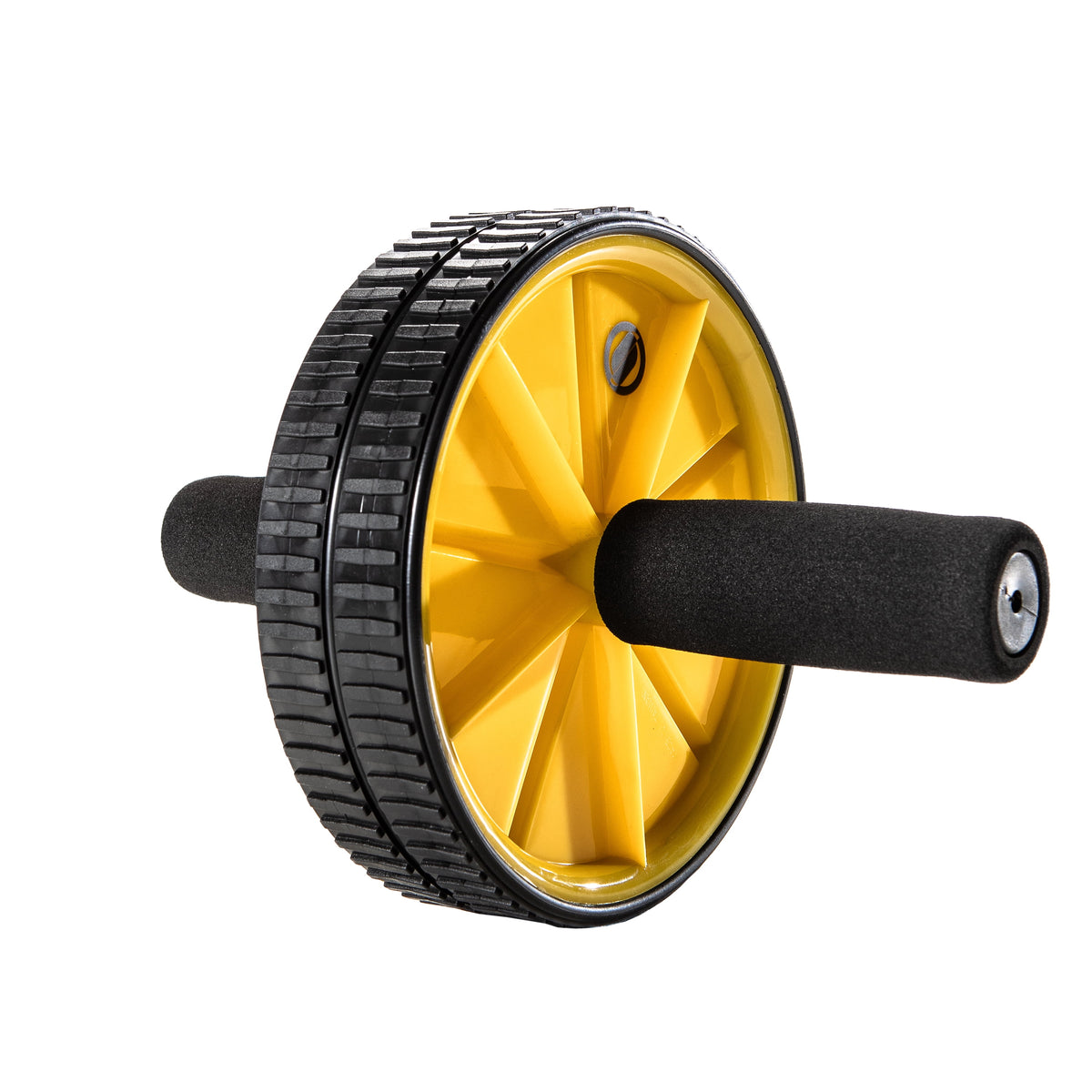
Use an ab roller only when you can maintain a controlled spine position. Begin with short rollouts from your knees. Do not chase distance. Chase control.
The Athletic Works 7-inch Dual Ab Wheel is one compact option for targeted core work.
5. Suspension Trainer
A suspension trainer uses body weight and leverage to create adjustable resistance. It supports pushing, pulling, squatting, lunging, and core exercises.
You can make an exercise easier by standing more upright. You can make it harder by changing your body angle.
Common movements include:
- Suspension rows
- Assisted squats
- Chest presses
- Hamstring curls
- Reverse lunges
- Plank variations
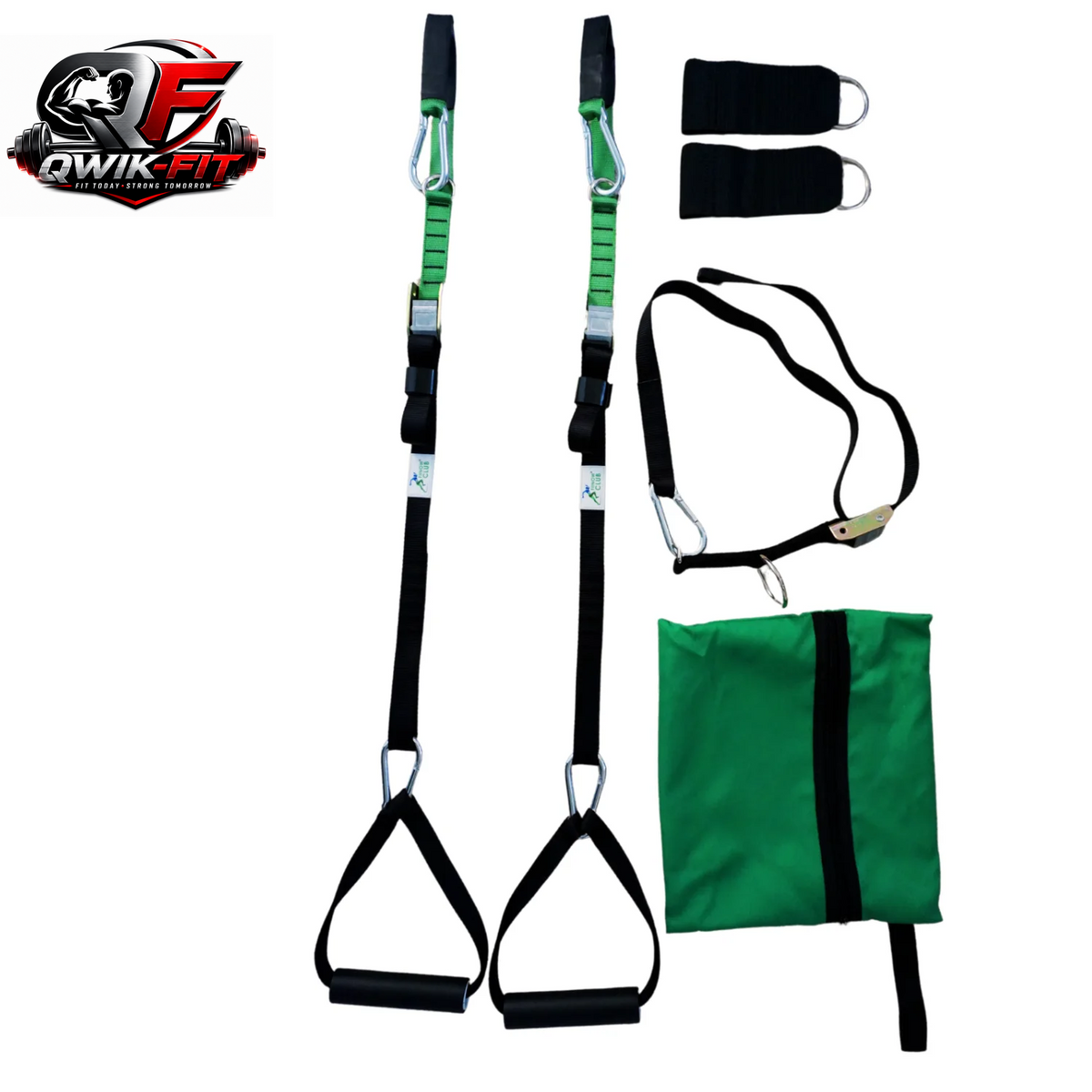
Always attach suspension equipment to a secure anchor designed for that purpose. Read the product instructions before use.
Qwik-Fit’s strength training equipment collection includes tools for both portable and dedicated home gym setups.
6. Mini Cardio Equipment
Some workouts require low-impact movement. A compact pedal exerciser or mini stepper can help you add activity without needing a full-size treadmill or bike.
These tools may fit under a desk or in a storage closet. They are useful for people who prefer seated or lower-impact movement.
Browse Qwik-Fit home cardio equipment to compare compact and full-size cardio options.
How to Build Your Portable Setup
You do not need to buy every tool listed above. Build your equipment in stages.
Step 1: Define Your Main Goal
Choose your first priority:
- Build strength: resistance bands, dumbbells, or a suspension trainer
- Improve cardio: jump rope or compact cardio equipment
- Train your core: ab roller and exercise mat
- Improve mobility: mat and yoga or Pilates accessories
- Train while traveling: bands, jump rope, and a mat
One clear goal prevents unnecessary purchases.
Step 2: Start With Three Anchors
For most people, a strong starter kit includes:
- Resistance bands
- Jump rope
- Exercise mat
This combination supports strength, cardio, mobility, and bodyweight training.
Add an ab roller or suspension trainer after you establish a regular routine.
Why it matters: Your first equipment investment should create more training options, not more clutter.
Step 3: Create a Storage System
Keep your equipment visible and organized.
Use:
- A gym bag
- A storage bin
- Wall hooks
- A drawer
- A dedicated shelf
The Qwik-Fit gym bag can help keep smaller equipment together for home, office, or travel use.
Your system should make setup take less than two minutes. Less setup means fewer reasons to skip.
Portable Workout Plan
Use this 20-minute full-body routine three times per week. Adjust the resistance and pace to your experience level.
Warm-Up: 3 Minutes
- March in place for 60 seconds
- Perform arm circles for 30 seconds
- Complete bodyweight squats for 60 seconds
- Practice light rope turns or step-touch movements for 30 seconds
Main Circuit: 3 Rounds
Complete 10 to 15 controlled repetitions of each exercise:
- Band squats
- Band rows
- Push-ups
- Band shoulder presses
- Reverse lunges
- Plank shoulder taps
Rest for 30 to 60 seconds between rounds.
Cardio Finisher: 5 Minutes
Alternate:
- 30 seconds of jump rope
- 30 seconds of rest or marching
Repeat five times.
The CDC physical activity guidelines recommend that adults combine regular aerobic activity with muscle-strengthening activity. Your exact routine can vary. The foundation is regular movement.
For more ideas, read Qwik-Fit’s guide to the benefits of HIIT training.
Safety Tips
Portable equipment is effective when you use it correctly.
Resistance Band Safety
- Inspect bands for cracks, tears, or worn areas.
- Do not use damaged bands.
- Secure anchors to stable surfaces.
- Keep your face and body away from the line of recoil.
- Control both the lifting and lowering phases.
Jump Rope Safety
- Clear the area around and above you.
- Use supportive workout footwear.
- Start with short intervals.
- Choose a surface that is not excessively hard.
- Stop if you feel sharp pain or unusual discomfort.
General Training Safety
Warm up before intense sessions. Keep your technique controlled. Progress gradually.
If you have a medical condition, injury, or concern about high-impact exercise, speak with a qualified health professional before beginning a new program.
Common Mistakes
Buying Too Much Equipment
More equipment does not automatically create better results. Begin with versatile tools you can use consistently.
Training Only One Area
Portable equipment can support full-body workouts. Include movements for your:
- Legs
- Hips
- Back
- Chest
- Shoulders
- Arms
- Core
Ignoring Progression
Your body adapts to repeated training. Progress by adding repetitions, increasing band resistance, slowing the tempo, improving range of motion, or reducing rest.
Choosing Complexity Over Consistency
A simple 20-minute routine completed three times per week is more valuable than an elaborate plan you rarely follow.
Consistency builds the structure. Equipment simply supports it.
Frequently Asked Questions
What is the best portable home gym equipment for beginners?
Start with a resistance-band set, jump rope, and exercise mat. This combination supports full-body strength, cardio, mobility, and core training without requiring much space.
Can portable equipment build muscle?
Yes. Muscle growth depends on progressive resistance, sufficient effort, recovery, and nutrition. Resistance bands, dumbbells, and suspension trainers can all make exercises progressively more challenging.
Is a jump rope good for cardio?
Yes. A jump rope elevates your heart rate and develops coordination and foot speed. Begin with short intervals and build gradually.
Can I use portable equipment while traveling?
Yes. Resistance bands, jump ropes, mats, and some suspension trainers fit easily into a travel bag. Check your available space and choose exercises that do not require permanent anchors.
How often should I use portable home gym equipment?
A practical starting point is three strength sessions per week, with additional light cardio or mobility work as your schedule allows. Recovery remains part of the plan.
Final Takeaways
Portable home gym equipment gives you a flexible foundation for training anywhere. Resistance bands build strength. Jump ropes support cardio. Mats create stability. Ab rollers challenge the core. Suspension trainers expand bodyweight training.
You do not need a perfect gym. You need a reliable system.
Start with the tools that solve your biggest barrier. Store them where you can see them. Follow a simple plan. Progress with patience.
Explore Qwik-Fit’s fitness accessories, strength training equipment, and yoga and Pilates collection to build your setup one anchor at a time. If you need help choosing equipment, visit our customer support center.
Start today. Stay consistent. Trust the process.